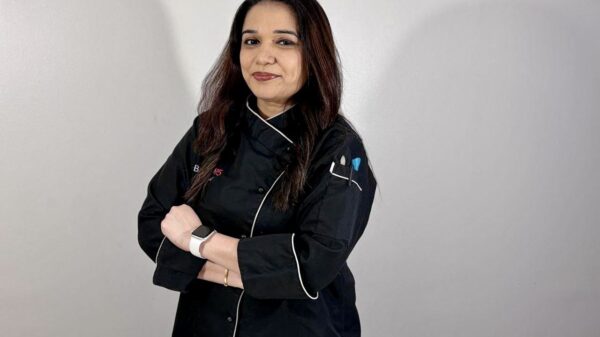
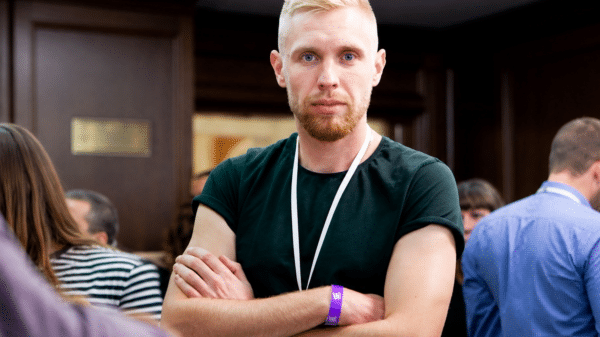








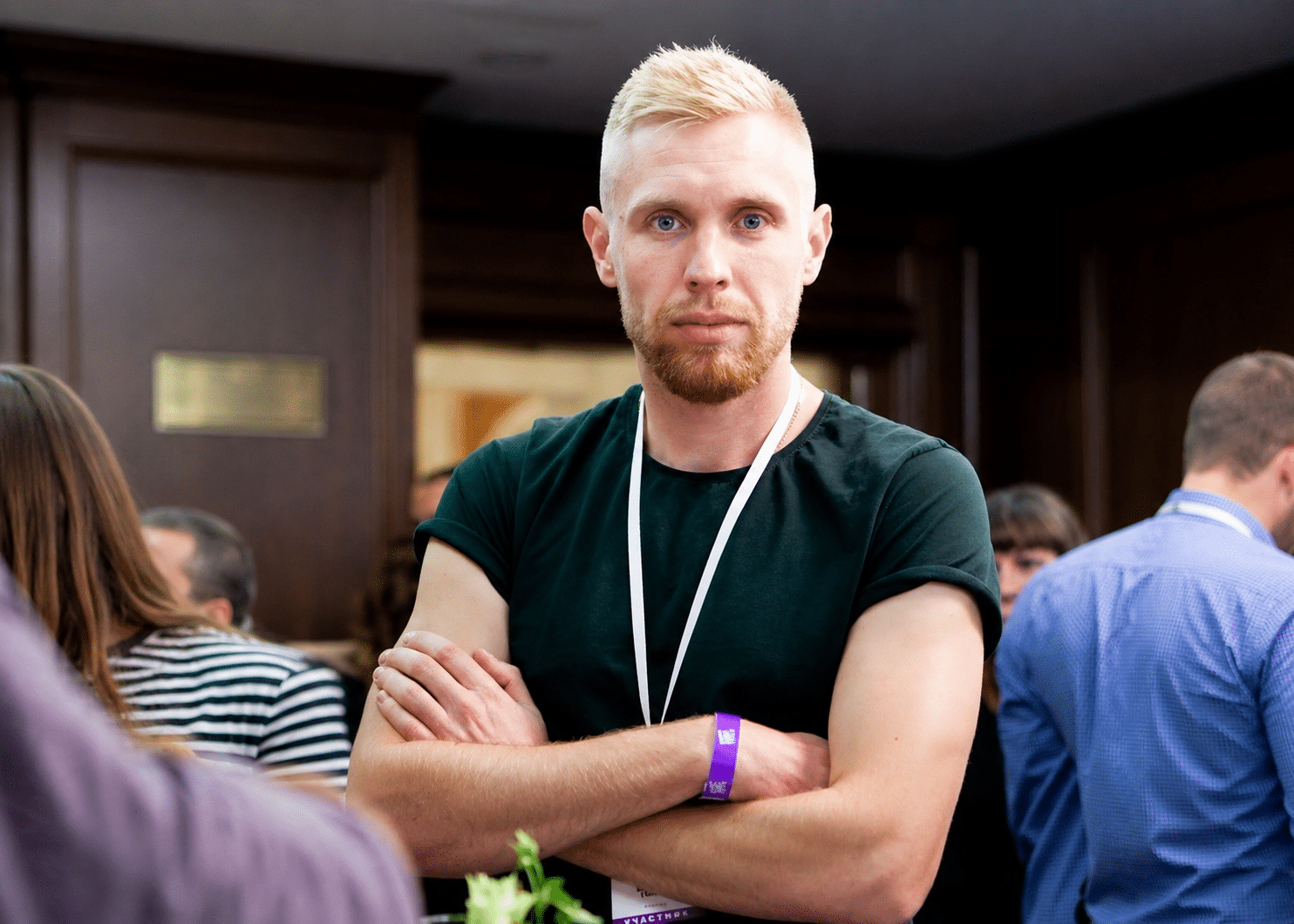
Vitalii Popov, managing partner of The Fitz Bar, Lou Lou Bistrot, Fratelli, and Fitz&Spritz Bar, speaks about restaurant leadership, bar culture, delivery, team loyalty, and why hospitality cannot be fully translated through a courier.
In 2021, restaurants around the world are still redefining themselves after the shock of 2020. Delivery became essential, digital communication accelerated, guests became more selective, and restaurant teams were forced to adapt to conditions no one had planned for. Yet one question remains central: what makes a restaurant truly irreplaceable?
For Ukrainian restaurateur Vitalii Popov, the answer has never been limited to food. As a managing partner behind several distinct hospitality concepts in Odesa — from the cocktail-driven identity of The Fitz Bar to the French-inspired Lou Lou Bistrot, the Italian tradition of Fratelli, and the mobile aperitivo culture of Fitz&Spritz Bar — his work reflects a broader understanding of what modern hospitality can be.
For Vitalii, a restaurant is not simply a menu, an interior, or a business model. It is a living system built around people, atmosphere, service, culture, and emotion. It is the feeling created around the table, the trust built inside the team, and the memory a guest carries after leaving.
Vitalii is also the creator of Barnation, a professional bar competition created to support growth, education, and visibility within the cocktail community. His experience connects restaurant operations with bar culture, concept development, and industry-building initiatives.
We spoke with Vitalii Popov about crisis management, delivery, bar culture, restaurant teams, and the future of hospitality. He believes that hospitality is not only about food or drinks, but about the full experience of being inside a place. It is the team, the atmosphere, the service, and the feeling that stays with a guest after they leave.
Looking back from 2021, what did the pandemic reveal about the restaurant business?
Vitalii Popov: I think the pandemic exposed both the weakness and the importance of the restaurant industry at the same time. When the lockdowns started, restaurant traffic disappeared almost overnight. Financially, it was a shock. But the difficult part was not only the loss of revenue — the responsibility doesn’t disappear with it. You still have your team, suppliers, landlords, and operational expenses. Restaurants are very “live” businesses. They cannot simply pause without consequences.
At the same time, that period reminded everyone what restaurants actually are. People often think restaurants only sell food, but in reality, especially with projects like The Fitz or Lou Lou, a huge part of the experience happens inside the space itself. The atmosphere, the music, the interaction with the team, the energy around the tables — those things cannot really be replaced. During quarantine, people realized they missed not just dining out, but the social side of restaurants. They missed seeing friends, sitting at the bar, celebrating something, feeling part of a place. I think the pandemic made both operators and guests understand the emotional role restaurants play in everyday life.
Many restaurants had to move quickly into delivery. What did delivery mean for your projects?
Vitalii Popov: Delivery became something we had to build very quickly in 2020. Before the pandemic, it was never a major part of our business model because most of our projects were designed around the dine-in experience. But quarantine forced restaurants to become much more flexible operationally. At the same time, we quickly realized that different concepts adapt to delivery very differently. For example, Asian formats worked much more naturally in that environment. With Suke, delivery became especially relevant because sushi, bowls, and casual Asian dishes already fit modern delivery habits quite well. Guests were comfortable ordering that type of food at home, so the concept adapted faster than some others. The situation also pushed us to experiment more. During lockdown, Lou Lou started making panettone for Easter. Honestly, I’m not sure we would have focused on that direction without quarantine. We also expanded more into comfort food and home-style products — syrniki, vareniki, breakfasts, casual dishes people could easily order regularly rather than only for special occasions. In many ways, quarantine forced restaurants to think beyond the traditional dining room. We started paying much more attention to packaging, transportation, digital communication, and how the product behaves outside the restaurant itself. Financially, delivery helped partially support operations and allowed part of the team to continue working during restrictions. But more importantly, it changed the way many operators viewed their business. After 2020, restaurants understood they need multiple ways to stay connected with guests, not just through the physical space.
During the crisis, many restaurant owners had to reduce teams or close projects. You and your partners decided to keep the team. Why was that important?
Vitalii Popov: Because in hospitality, the team is not something separate from the restaurant — in many ways, the team is the restaurant. Of course, financially it was a very difficult period. Like many operators, we had moments where we were calculating different scenarios almost weekly. But from the beginning, we understood that if we lost the core team, rebuilding the projects afterward would be much harder than surviving several difficult months financially. People outside the industry sometimes underestimate how much restaurant culture depends on staff continuity. The bartender remembers regular guests. The waiter understands the rhythm of the room. The kitchen team knows how the service actually works under pressure. Those things are built over years, not weeks. We tried to support the staff as much as possible during the first lockdown period, including financial support in April when the uncertainty was especially high. It was important for us not only professionally, but also personally. Many of us had been working together for a long time by that point. I think crises show very clearly what kind of company you really are. In good times, it is easy to speak about values and team culture. Difficult periods test whether those things are actually real.
What did you personally learn as an operator during that period?
Vitalii Popov: I think the biggest lesson was understanding how important flexibility is in restaurant operations. In normal times, many decisions can be made slowly and strategically. During the pandemic, sometimes you had to make decisions almost daily. The crisis also showed very clearly which parts of the business were actually stable and which only seemed stable during good periods. You start paying much more attention to operational structure, financial reserves, supplier relationships, lease negotiations, and internal communication with the team. At the same time, I realized how important strong partnerships are in hospitality. During quarantine, some landlords and partners were willing to negotiate and support restaurants through a very uncertain period. Without that cooperation, many projects simply would not have survived. Another important thing was learning how to adapt without turning the project into something completely different. We introduced delivery, worked more with digital communication, expanded certain product lines, but we still tried to preserve the identity of each concept. I never believed that crisis should completely redefine a restaurant. Adjustments are necessary, but guests still need to recognize the place they originally connected with. I think operators after 2020 became much more realistic. The industry matured very quickly during that period.
Let’s talk about restaurant atmosphere. Why is it so important?
Vitalii Popov: Because atmosphere is usually the reason people come back. Good food is important, of course, but today many restaurants can cook well. What guests actually remember is how the place made them feel. Sometimes it’s the music, sometimes the lighting, sometimes the energy of the room on a Friday evening, or simply the way the staff interacts with the table. I think atmosphere is created through many small details working together at the same time. The pace of service, the sound level, the behavior of the team, the bar movement, even the distance between tables — all of that affects the guest subconsciously. For example, The Fitz and Lou Lou are completely different concepts emotionally. One has a more energetic bar environment, while the other is softer and more daytime-oriented. Guests immediately feel that difference when they walk in, even before they order. That’s why I don’t see atmosphere as decoration alone. Design matters, but atmosphere is more about coordination between people, service, timing, music, lighting, and the overall rhythm of the place. When those elements are balanced correctly, the restaurant starts to feel natural instead of artificial.
You work with both restaurants and bars. What role does the bar play in a modern restaurant?
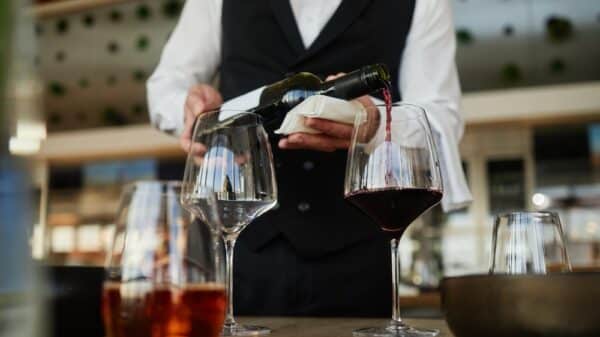
Vitalii Popov: I think today the relationship between restaurants and bars has become much more flexible than it was before. In some modern restaurant concepts, a bar is not even the center anymore. Sometimes the focus shifts toward cuisine, bakery programs, coffee culture, breakfast formats, or very niche mono-concepts. A restaurant can work successfully without a strong cocktail component at all. At the same time, bars themselves have evolved into completely independent businesses. In many cities, a successful bar can generate stronger guest loyalty and cultural influence than a traditional restaurant. Bar culture today is its own world — with its own audience, professionals, rhythm, and identity. For me, the interesting challenge is when those two worlds can complement each other correctly. With Lou Lou and The Fitz, we approached it almost as an ecosystem rather than one venue depending on another. They are physically located next to each other, but emotionally they work at different times of the day and for different guest moods. Lou Lou is very active with breakfasts, daytime meetings, brunches, lunches. The Fitz has a more evening-oriented cocktail energy. Because of that, they don’t compete internally — they extend the guest experience. Someone can start the day with breakfast or coffee at Lou Lou and later end the evening at The Fitz. Even operationally, the spaces interact naturally. During daytime hours when The Fitz is closed, part of its terrace and seating area can function as additional space for Lou Lou. I think that is very important in modern hospitality — creating concepts that are able to coexist and strengthen each other instead of simply duplicating functions. So today, I would not measure the importance of a bar only as part of a restaurant. A bar can be a completely independent destination, or it can become one of the strongest elements inside a larger hospitality concept. Both models can work successfully
In 2021, many restaurants are trying to simplify operations. Is that a good thing?
Vitalii Popov: I think simplification is necessary to some degree, especially after what the industry experienced in 2020. Many operators realized that overly complicated systems are difficult to sustain during unstable periods. Restaurants started paying much more attention to efficiency, labor costs, menu engineering, inventory control, and operational flexibility.
In reality, simplification often happens naturally as businesses mature. Operators begin to understand which elements truly create value for the guest and which only make the system heavier internally.
But there is also a danger when simplification becomes purely financial. Sometimes restaurants reduce too much — the menu loses personality, service becomes mechanical, interiors become interchangeable, and eventually the concept stops feeling unique.
For me, the goal is not to make a restaurant simpler at any cost. The goal is to make it more sustainable without losing character.
I think guests can immediately feel when a concept was optimized intelligently versus when it was stripped down only to save money. Those are very different things.
Some of the strongest concepts after 2020 were not necessarily the cheapest or smallest ones. They were the concepts that understood their identity clearly and learned how to operate more efficiently around it.
What makes a restaurant concept strong enough to survive difficult periods?
Vitalii Popov: I think strong concepts usually have a very clear identity. Guests immediately understand what the place is, what mood it creates, and why it exists. That clarity becomes especially important during unstable periods because people tend to return to places they already emotionally trust.
At the same time, a concept is much more than cuisine alone. Sometimes operators focus too heavily on food and underestimate everything around it. In reality, guests remember combinations of things — atmosphere, service style, music, comfort, timing, energy, communication, even the type of crowd a place attracts.
Another important factor is adaptability. The market changes constantly, and after 2020 that became even more obvious. Consumer behavior changes, costs change, trends change. If a concept is too rigid operationally, eventually it becomes difficult to sustain.
But adaptability should not mean chasing every trend. I think one of the biggest mistakes is when restaurants start losing their personality trying to follow the market too aggressively.
Personally, I also believe that a concept becomes truly strong because of the people behind it. The team, the operators, the attention to detail, the consistency of execution — those things ultimately matter more than the external “packaging” alone.
Today many restaurants can create visually attractive interiors or trendy branding. But what really determines whether a concept survives is the depth of the idea itself and whether it remains genuinely relevant to guests over time. In the end, what matters most is not only how the concept looks from the outside, but what is actually inside it.
How did the pandemic change guests?
Vitalii Popov: The pandemic changed guests emotionally, not only behaviorally. People became more aware of safety, comfort, and trust. They started thinking more carefully about where they go and why.
At the same time, I think people began to appreciate restaurants more. When you lose the ability to visit your favorite places, you realize that restaurants are part of your lifestyle and emotional routine. They are not only about consumption. They are about meetings, celebrations, habits, and memories.
In 2021, guests want to feel safe, but they also want to feel alive again. They miss atmosphere, communication, music, energy, and human connection. They want to return to places that give them emotions, not only service.
That is why restaurants must be responsible, but not cold. Safety is important, but hospitality should still feel human.
What qualities does a restaurant leader need now?
Vitalii Popov: A restaurant leader today needs flexibility, discipline, and empathy.
Flexibility — because the market, guest behavior, and circumstances can change very quickly.
Discipline — because without systems and operational control, even a beautiful concept will not survive.
Empathy — because restaurants are built by people and for people.
But today, being simply a restaurateur with experience is no longer enough. The industry changes too fast. You need to adapt faster, think more critically, and understand that we are working at the intersection of generations, trends, technologies, and changing lifestyles. Events like lockdowns can completely change the rules of the game within weeks. Guest expectations evolve constantly. Information has become accessible to everyone. Today, someone can watch a recipe on YouTube and recreate a dish at home without studying gastronomy for years. That is why restaurants can no longer compete only through food techniques or complexity. Coffee can now become a gastronomic experience by itself. A cocktail does not have to be highly technical or even alcoholic to create value. Alcohol is no longer equal to mixology.
For me, modern hospitality is less about showing complexity and more about creating relevance, emotion, atmosphere, and connection.A leader must understand numbers and operations, but also understand culture, people, and where the industry is moving next. Because in the end, guests always feel the internal philosophy of a place.
You have worked with different formats — bar, bistro, restaurant. Is there one principle that connects them all?
Vitalii Popov: Yes. The guest should feel that the place has a soul.
The format can be different — a cocktail bar, a bistro, or a fine dining restaurant. But the principle is always the same: the guest should understand where they are, why this place exists, and what kind of emotion it creates. For me, strong hospitality is always built around values, culture, and openness to the world. Restaurants today cannot exist in isolation. Guests travel more, see more, and understand global trends better than ever before. At the same time, openness should not destroy identity. The strongest places are those that combine international inspiration with their own character and atmosphere. That is why every detail matters — food, drinks, music, design, service, and team culture should all speak the same language.
What do you think will happen to the restaurant industry after 2021?
Vitalii Popov: I think the restaurant industry will become more flexible, more technological, and at the same time more emotional. Delivery and digital communication will continue to grow. Guests will expect speed, convenience, and personalization. Technology will become a normal part of hospitality, not something additional. But at the same time, this will increase the value of real human experiences. People will continue searching for places where they can meet, communicate, celebrate, and feel emotions that cannot be delivered through an app. I also think the industry will become much more demanding. Today, trends spread instantly, information is accessible to everyone, and guests compare experiences globally. It is no longer enough to simply open a restaurant with good food. Concepts need identity, relevance, and a clear philosophy. Weak and artificial projects will disappear faster. Strong concepts will survive if they know how to adapt without losing themselves. For me, the main challenge for restaurant owners will be understanding what should evolve and what should remain untouched. You can change technology, operational models, marketing, or service formats. But you must protect the culture, values, and emotional core of the place.
What advice would you give to chefs or young restaurateurs building their first concept in 2021?
Vitalii Popov: My advice would be: do not build a concept only around trends. Trends change very quickly. Try to build something you genuinely understand and emotionally connect with. Guests always feel that a place is created only because something is fashionable. And they also feel when there is real passion, culture, and personality behind a project. Before opening a restaurant, you need to experience life, travel, observe people, visit different places, communicate, taste, compare, and develop your own understanding of hospitality. Inspiration is extremely important in this industry. I also believe you should create only concepts that you personally love and would genuinely enjoy visiting yourself. Because if there is no real emotional connection between the creator and the project, eventually the guests will feel that too. Restaurants are not only about food anymore. Today, people can find recipes online, recreate dishes at home, and follow global trends instantly. What truly matters now is atmosphere, identity, emotion, and the feeling a place creates around people. That is why experience, curiosity, and sincerity are becoming more important than simply following trends.
Finally, after everything the industry has experienced, are you optimistic?
Vitalii Popov: Yes, I am optimistic, but realistically optimistic.
The last years were extremely difficult for the industry. They created pressure, uncertainty, and forced many people to completely rethink their businesses. But at the same time, this period reminded everyone how important hospitality actually is. People realized that restaurants are not only places to eat. They are places for meetings, emotions, communication, inspiration, and human connection. During isolation, many people understood how much they missed atmosphere and the feeling of being part of life outside their homes. Of course, the industry will continue changing. Concepts will become more flexible, operations more technological, and guests more demanding and informed. But I think the core of hospitality will remain the same. People will always need people. And places with real culture, emotion, and soul will always matter.
Editor’s Note
Vitalii Popov’s view of hospitality feels especially relevant in 2021 because it avoids two extremes. He does not romanticize the restaurant business as pure creativity, but he also does not reduce it to delivery, numbers, or operational efficiency.
His approach is built on balance: atmosphere and discipline, emotion and systems, team loyalty and financial realism, tradition and adaptation.
For chefs, restaurateurs, and hospitality professionals, his experience is a reminder that the future of restaurants will not belong only to those who cook well or design beautifully. It will belong to those who understand how to build places people want to return to.
Because a restaurant is not just food.
It is people, atmosphere, and memory.