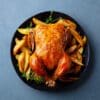








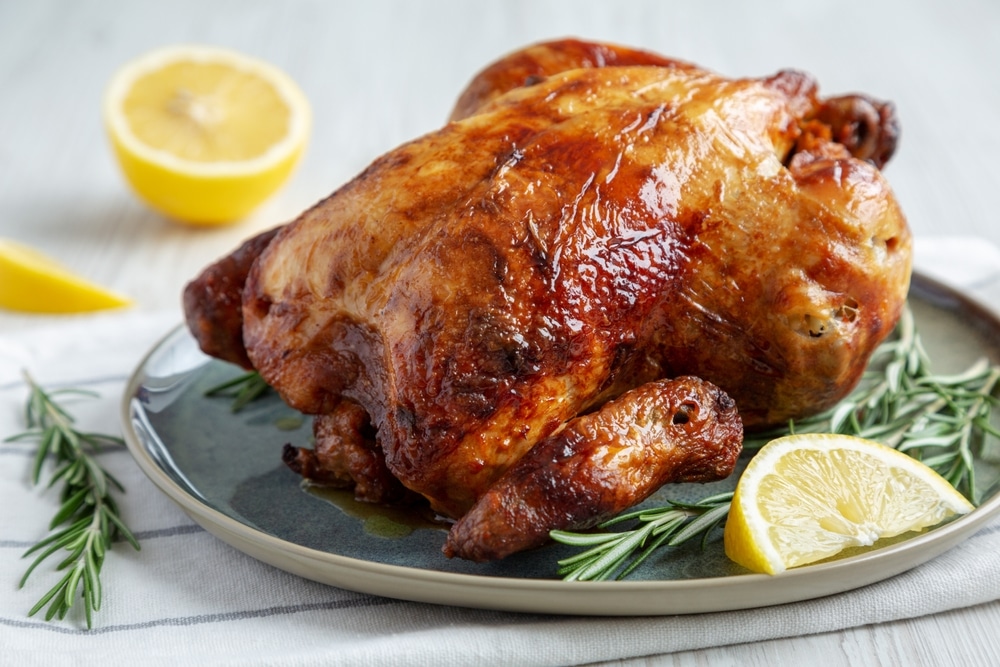
The rise of rotisserie chickens can be traced back to the 1990s when these succulent birds first graced supermarket shelves. Despite their popularity, sourcing details often remain vague. Major supermarket chains, like Albertsons and Safeway, rarely disclose where their rotisserie chickens come from. Leading poultry producers such as Tyson and Perdue are likely involved, but that remains speculation without verified information.
However, several prominent supermarket chains have shared specific details regarding the origins of their rotisserie chickens. Here’s a closer look at where seven noteworthy chains get their chickens.
1. Costco directly sources its chicken
When it comes to rotisserie chicken, Costco stands out. Its incredible $5 price point has made it an irresistible choice for many. While it may not be the healthiest option due to high sodium content and cholesterol, purchasing such a quality meal for that price is hard to beat.
Interestingly, Costco’s rotisserie chicken operates as a loss leader; they intentionally lose money on each chicken to entice customers into the store to buy more profitable items. The primary supplier for these rotisserie chickens is Lincoln Premium Poultry, a company founded specifically to supply chicken to Costco. This setup accounts for 40% of the chicken sold at Costco, with the remainder sourced from local farmers. This strategy enables Costco to maintain competitive pricing.
2. Whole Foods partners with ethical farms
Cooked grocery store chickens typically have a better price point compared to raw alternatives. Take Whole Foods, where rotisserie chickens are priced at $8.99 — significantly less than their raw counterparts, which can start at $10.
While Whole Foods’ pricing may be higher than Costco’s, the store emphasizes its commitment to ethical sourcing. Their rotisserie chickens are sourced from farms certified by the Global Animal Partnership (GAP), specifically those at Step Five, ensuring higher animal welfare. This means the chickens enjoy more space, shorter transport times, and climate protection. For shoppers invested in ethical sourcing, Whole Foods stands out as a trustworthy option.
3. Sprouts reportedly sources from Perdue Farms
Sprouts Farmers Market has kept its rotisserie chicken supplier a mystery, but anecdotal evidence from employees suggests they get their chickens from Perdue, a major poultry supplier. This speculation emerged in a Reddit thread and has yet to be confirmed by the company.
Interestingly, Sprouts chickens often come pre-seasoned. Their Unseasoned Roasted Chicken, for example, contains sodium levels of 320 milligrams per 4-ounce serving, presumably tied to Perdue’s preparation methods, which can lead to enhanced flavors. Despite this, Sprouts prides itself on not using hormones, steroids, and antibiotics.
Sprouts ranked high in rotisserie chicken quality on a recent Mashed ranking, proving that even big suppliers can produce high-quality options.
4. Wegmans collaborates with a historic chicken producer
Wegmans is known for its community focus and high-quality offerings, often praised for its premium rotisserie chicken. The supermarket chain sources its chickens from Bell & Evans, the oldest branded chicken company in America, based right in Pennsylvania, aligning with Wegmans’ dedication to local sourcing.
What sets Bell & Evans apart are its farming practices and meat processing methods, including air chilling, which enhance the quality. This dedication to quality reflects Wegmans’ values, confirming their commitment to providing top-tier products.
5. Fairway Market features Bell & Evans as well
Although Fairway Market operates only a few locations in New York City, it has gained recognition for its exceptional rotisserie chicken, even earning accolades on social media. Their chickens, sourced from Bell & Evans, offer a high standard of taste and quality.
Food reviewer Johnny Novo has praised Fairway’s seasoned Latin rotisserie chicken as the best available, marking it as a standout option for chicken lovers. With this level of commitment to quality, Fairway sets itself apart from standard supermarket offerings.
6. H-E-B sources from local Texas farms
H-E-B has solidified its reputation in Texas with a focus on local sourcing. The grocery chain yields a high-quality rotisserie chicken selection sourced primarily from independent family farms within the state.
This commitment to local sourcing is reflected in their Central Market brand, which produces a Tuscan Herb rotisserie chicken, explicitly advertising its Texan origins. Maintaining quality standards is crucial, even when sourcing from larger suppliers, ensuring that every option meets customer expectations.
7. Erewhon selects premium Mary’s Chicken
Erewhon, a unique chain in Los Angeles, carries organic and free-range rotisserie chickens from Mary’s Chickens. Renowned for high prices, Erewhon’s commitment to sourcing premium products is noteworthy.
Mary’s Chicken maintains family-owned traditions since 1954, boasting certifications that reflect animal welfare and quality. Although Erewhon’s prices can be steep — typically averaging around $25 for a rotisserie chicken — their partnerships ensure high standards that some buyers may find worthwhile.